Selectivity Before Execution: Five Gates for UK Trade Ideas
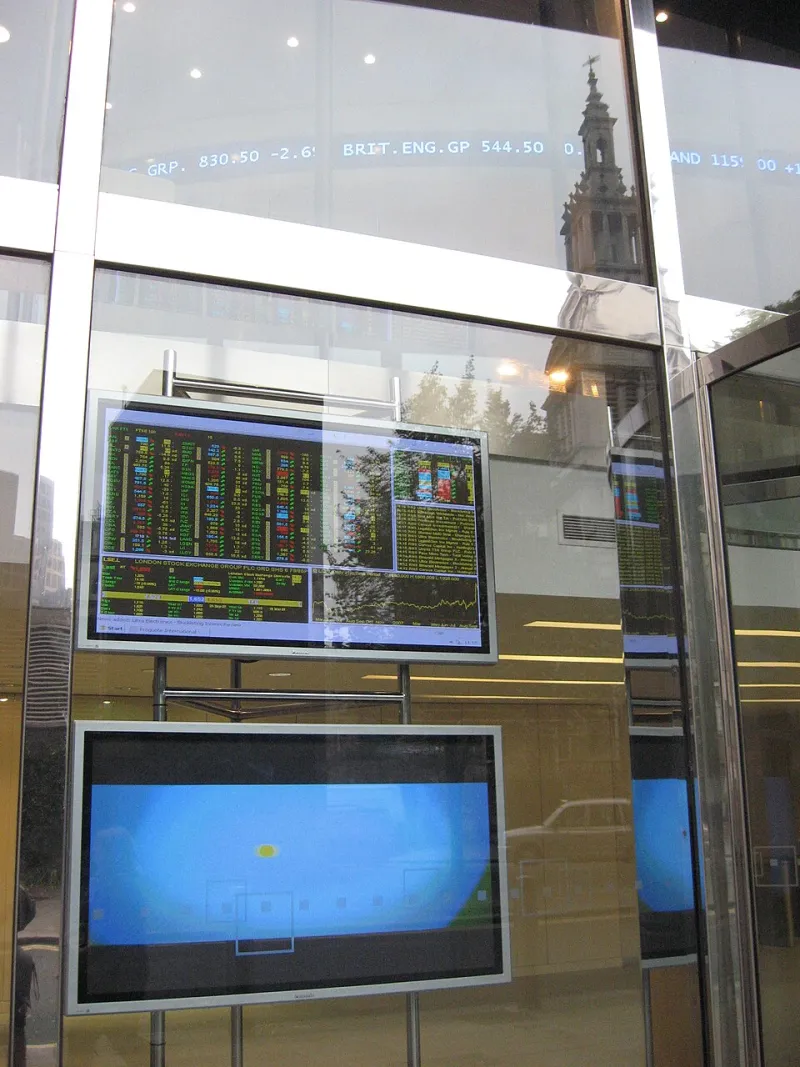
Photo: Kaihsu Tai, CC BY-SA 3.0, via Wikimedia Commons
Disciplined trading is often described as the art of finding opportunities. In practice, it is more often the discipline of refusing them. By the time a UK trade reaches the order ticket, the decisive work should already have been done. The ticket is an execution document, not a debating chamber. The five gates below are designed for that earlier stage: a pre-trade screen that asks whether an idea deserves capital at all. They are deliberately conservative, and they are intended to be used in 2026 as much as in any other year.
Gate One: Catalyst Quality
A trade needs a reason to move, and that reason should be identifiable, time-bound and material. Vague notions of sentiment, momentum or a chart looking stretched are not catalysts. They may be context, but they are not a thesis. For UK equities, the distinction matters because the FTSE 100 and FTSE 250 behave differently. A large defensive constituent may react slowly to a broker note, while a mid-cap industrial can reprice sharply on a scheduled trading update.
The first filter therefore asks a simple question: what specific event or condition is likely to change the market's assessment of this company or index in the next few weeks? If the answer cannot be stated without hedging, the idea is not ready. A catalyst does not need to be dramatic. It does need to be real, dated and capable of moving the instrument beyond its normal noise.
Gate Two: Liquidity and Spread
UK markets are not uniformly liquid. The largest FTSE 100 names trade in deep order books, but even there liquidity can thin around the open, the close and major news. Further down the market, in the FTSE 250 and smaller companies, the cost of crossing the spread can quietly consume the edge that justified the trade.
This gate compares the intended risk with the realistic cost of entry and exit. If the spread represents a meaningful share of the distance to the invalidation level, the setup is already weaker than it appears. Traders should also consider normal market size, average daily volume and the likely behaviour of the order book if the position needs to be closed quickly. A tight spread on a quiet afternoon is not proof of liquidity during a sell-off.
Gate Three: Event-Calendar Proximity
Event risk is not an inconvenience to be ignored; it is part of the price. In the UK, the calendar includes Bank of England decisions, inflation releases, fiscal statements, index reviews and company-specific events such as annual results, trading updates and ex-dividend dates. Global events, particularly US inflation data and Federal Reserve communication, also transmit into London pricing.
The filter asks whether a known event falls within the intended holding period. If it does, the trader has three choices: reduce the position, shorten the horizon or reject the trade. What should not happen is a full-size position carried into an event without explicit acknowledgement. Event proximity is not a reason to be brave. It is a reason to be precise about what is being risked.
Gate Four: Invalidation Clarity
Every trade should have a pre-defined answer to the question: what would prove this idea wrong? That answer can be a price level, a change in fundamentals, a failed reaction to news or a shift in the broader market regime. What matters is that it is written before entry and is specific enough to be acted upon.
If invalidation cannot be expressed in one or two sentences, the trade is usually a hypothesis in search of a stop. That is particularly dangerous in UK mid-caps, where a single announcement can gap the price through a convenient chart level. A clear invalidation point also disciplines position size, because the distance from entry to invalidation defines the risk per share or per point. Without it, sizing becomes guesswork.
Gate Five: Position-Size Fit
A good idea at the wrong size is a bad trade. The final gate asks whether the position can be sized within the account's risk budget without becoming either trivial or uncomfortable. If the correct size is so small that the outcome would not matter, the trade is probably not worth the operational attention. If the correct size is large enough to disturb judgement, the trade is too big regardless of the thesis.
Position-size fit also has a market dimension. FTSE 250 names often require wider stops than FTSE 100 constituents, which means a smaller position for the same account-level risk. That is not a flaw in the idea; it is a fact of volatility. The filter simply ensures the trader respects it before execution rather than after.
The Rejection Log
Selectivity improves when it is recorded. A simple rejection log can note the date, instrument, proposed catalyst, reason for rejection and what happened next. Over time, this creates a useful record of avoided marginal trades as well as missed opportunities. The aim is not to celebrate every rejection, but to understand whether the screen is too tight, too loose or correctly calibrated.
At Sapphire Traders, the preference is for a process that protects capital first and explains performance second. The five gates do not guarantee better returns in every period. They do, however, make it harder for weak setups to reach the order ticket by default. In 2026, with UK equities exposed to a dense economic calendar and uneven liquidity, that discipline is likely to matter more than another indicator.