Borrowed Momentum: A UK Execution Protocol for London's Afternoon Spillover

Photo: mattbuck (category), CC BY-SA 4.0, via Wikimedia Commons
At 14:30 GMT on a November afternoon, New York's cash equity market opens. For UK traders, the hour either side is a curious hybrid: London is still open, sterling is still active, and the FTSE 100 is still quoting, but the marginal price-setter has moved to the other side of the Atlantic. The tape begins to borrow New York's momentum. The danger is treating that borrowed momentum as a UK signal.
The spillover is a liquidity event first
US futures, pre-market prints and the 13:30 GMT macro releases set the tone long before the cash open. By the time New York equities begin trading, UK large-caps with dollar earnings, index futures and sterling crosses have already been repriced. What arrives at 14:30 GMT is not new information so much as a change in who is willing to make prices, and at what size.
That distinction matters. When US cash equities open, dealers re-hedge, exchange-traded funds create and redeem, and index arbitrage links futures to cash. The visible result is a burst of direction. The invisible result is a change in market depth. Before the open, liquidity providers reduce risk; quoted spreads widen and displayed size at the touch thins. After the open, volume returns, but volatility is higher and the first prints are noisy. A move that looks like confirmation may simply be the market paying up for immediacy in a temporarily fragile book.
Three windows, three execution problems
The London afternoon is not one regime. It is at least three, and each demands a different posture.
13:30 to 14:30 GMT: pre-open positioning. US data lands, futures react, and UK books thin ahead of the cash open. Headline risk is high and depth is unreliable. New risk initiated here should be pre-planned, not reactive. Limit orders are essential; market orders invite the widest spread of the day.
14:30 to 15:15 GMT: the opening rotation. Genuine volume arrives, but the first ten minutes are for price discovery, not for size. Spreads are wide, ticks are fast, and stop clusters near round numbers are vulnerable. The 15:00 GMT hour often looks like a mature trend, but by then faster participants have already positioned. For UK mid-caps, depth may not return until later still.
15:15 to 16:30 GMT: the London close approaches. Depth improves in large-caps, but the closing auction begins to dominate. For index exposure, the cash close and the subsequent uncross can create their own distortions. Execution that ignores the auction window is execution that ignores half the order book.
Reading spread and depth, not just price
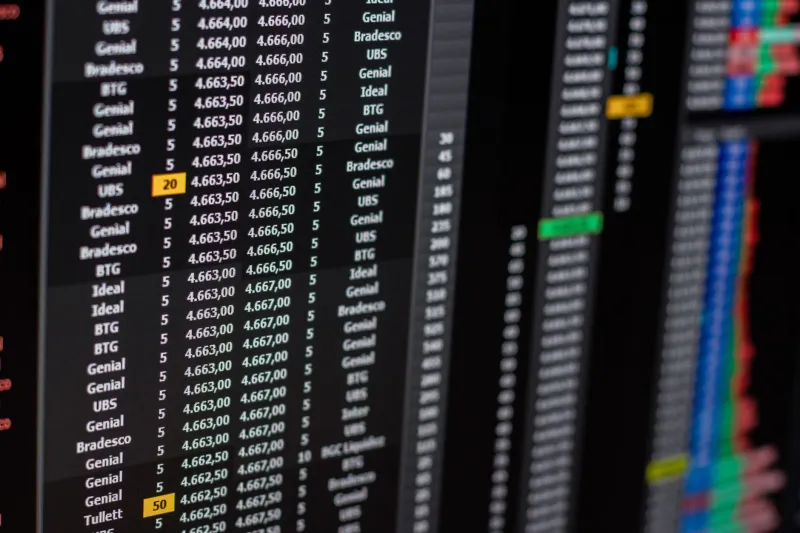
A breakout on a widening spread and falling top-of-book depth is not a breakout. It is a liquidity event. UK traders should monitor three things alongside price: the quoted spread in basis points, the displayed size at the touch, and the slope of the book beyond the touch. A useful rule is to compare current volume with the same time-of-day profile over the past twenty sessions. A 100,000-share print at 14:40 GMT is not the same as 100,000 shares at 10:00 GMT.
This is especially true for instruments with different liquidity DNA. FTSE 100 futures usually lead the cash index, but they can gap and overshoot. Sterling crosses react to US data and the US open with their own rhythm. Large-cap shares with US revenue exposure may track New York more closely than the domestic index. A single chart cannot capture all three.
A checklist for timing, sizing and execution
- Treat 14:00 to 15:00 GMT as a reduced-size window. Half normal risk is not timidity; it is recognition that depth is thinner.
- Wait for the first ten minutes after the US cash open to pass. The opening rotation is for observation, not for size.
- Use limit orders with immediate-or-cancel instructions where appropriate. Avoid market orders in the afternoon spillover.
- Predefine maximum slippage against arrival price. If the market exceeds it, abandon the order rather than chase.
- Check cross-asset confirmation: US futures, sterling and the relevant sector. Do not rely on the UK index alone.
- Extend the waiting period for mid-caps and less liquid instruments. Depth returns later than the headline index suggests.
- Record the time, spread, top-of-book depth and volume relative to the time-of-day average for every afternoon trade. Build a ledger, not a memory.
A worked example without the fantasy
Suppose a FTSE 100 exporter breaks above a prior high at 14:35 GMT. The move looks decisive, but volume is 30 per cent below the normal afternoon profile, the spread has doubled, and displayed depth at the touch has halved. A disciplined trader waits. By 15:00 GMT, volume has normalised and the spread has narrowed. The trader enters at half normal size with a limit order, sets invalidation based on market structure rather than the noise of the first print, and measures slippage against arrival price. If the breakout fails, the exit is small and planned. The point is not to predict New York; it is to avoid paying too much to react to it.
The discipline dividend
New York will always open. The question is whether UK traders pay too much to react to it. The afternoon spillover is not a signal in itself; it is a liquidity regime with its own costs and constraints. Treat it as an execution problem, and the apparent momentum becomes easier to separate from the mirage of thin depth.