Thin Ice, Real Costs: Auditing the Execution Drag on UK Portfolios
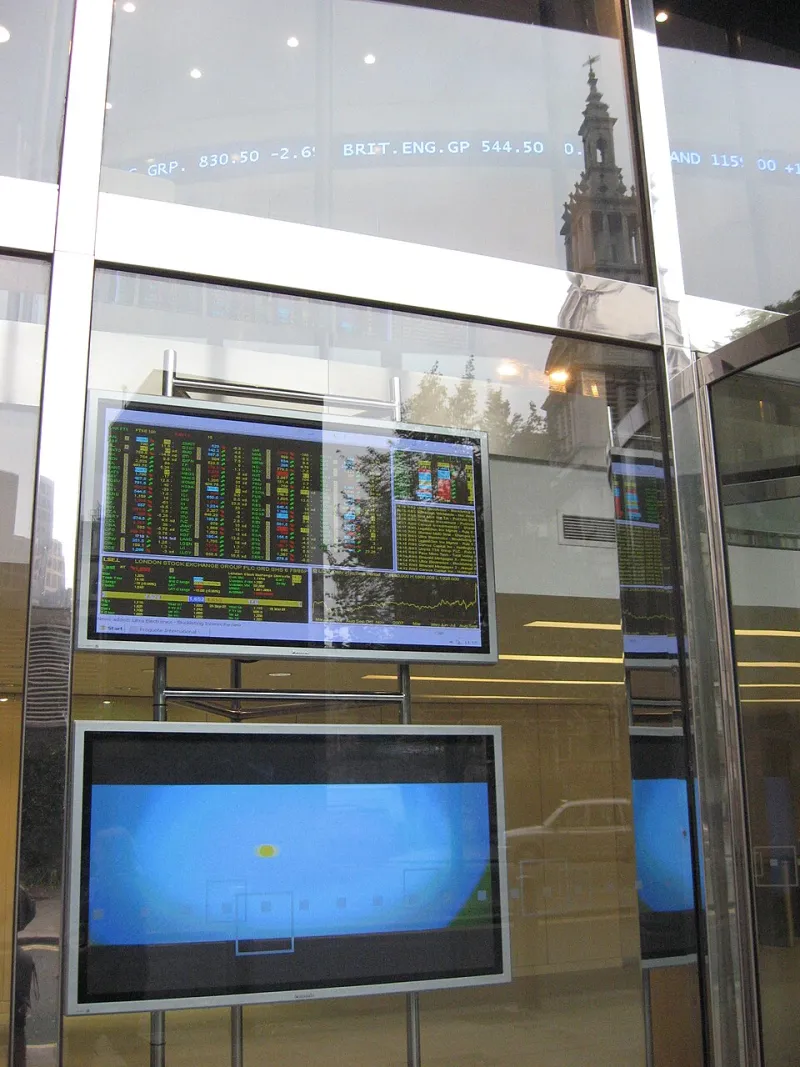
Photo: Kaihsu Tai, CC BY-SA 3.0, via Wikimedia Commons
Most UK traders can quote their platform commission to the penny. Far fewer can say what a round trip actually costs once the order book gets thin. That gap matters. In quieter corners of the London market — particularly FTSE 250 names, AIM stocks and smaller exchange-traded products — the visible commission is often the smallest part of the bill.
The rest is paid in wider quoted spreads, slippage between decision and fill, and the opportunity cost of chasing a price that has already moved. Call it the liquidity tax. It is not a line item on a contract note, but it is deducted from performance all the same.
Where the tax is levied
Liquidity is not uniform across the UK market. A FTSE 100 large-cap may trade with a penny-wide spread for much of the session. A mid-cap with a market capitalisation in the low billions can show a spread several times wider. An AIM stock with a narrow free float can be wider still, with quote sizes that make a modest order look large relative to the available depth.
The London open is a particular pressure point. The opening auction resolves at 08:00, but the first minutes of continuous trading often involve wide quotes, stale indications and rapid price discovery. Traders who rush to fill at the bell may pay for the privilege. The same applies around scheduled macro releases, Bank of England decisions and major US data, when quotes can widen sharply and fills can arrive well away from the screen price.
Market impact is the quieter component. A retail order in a liquid large-cap may leave no trace. The same order in a thin mid-cap can move the price before the full size is filled. That is not a broker failing; it is the market charging for immediacy.
Measuring your own bill
The practical response is not to avoid thin markets altogether. It is to measure what they cost you. An execution audit starts with the arrival price: the mid-price at the moment you decide to trade. Record it, along with the bid and offer at that moment, the time, the order type and the eventual fill.
From there, two simple calculations do most of the work. Slippage is the difference between the arrival price and your average fill, expressed in basis points. Effective spread is the difference between your fill and the mid-price at execution, again in basis points. Aggregate both by instrument, time of day and order type.
The results are often uncomfortable. A trader who pays 10 basis points per round trip and completes 20 round trips a year has surrendered roughly 2% of capital before commission and before any view on the market. In a thin mid-cap, the figure can be higher. If the strategy depends on frequent entries and exits, execution drag can quietly become the largest single cost.
A useful discipline is to add four fields to every trade record: arrival mid, quoted spread at entry, fill price and time to fill. After a month, sort the data by hour of the session. Most UK traders will find that the first 15 minutes after 08:00 and the period around 16:30 are materially more expensive than the middle of the day. That is not a reason to avoid those windows entirely; it is a reason to demand a better reason before trading in them.
Timing over chasing
Execution quality is rarely improved by urgency. The trader who chases a fill because the price is moving often pays twice: once in slippage and again in a worse entry that distorts the risk-reward calculation. A passive-first approach is usually more disciplined. Use limit orders where the platform permits, work orders in line with visible depth, and accept that some trades will not be filled.
For thinner UK names, size relative to average daily volume matters more than the notional value of the order. A £5,000 order in a stock that trades £50,000 a day is a different proposition from the same order in a stock that trades £50 million a day. Checking the spread and the depth before entry is not over-analysis; it is basic cost control.
Scheduled news deserves its own rule. If a position is opened minutes before a CPI release or a central bank decision, the trader is not just taking a market view. They are accepting a wider spread and a higher probability of a poor fill. For some strategies that is acceptable. For most, it is an avoidable expense.
A 2026 execution checklist
- Check the quoted spread against its recent average before entry. If it is unusually wide, ask why.
- Compare intended size with visible depth and average daily volume in the instrument.
- Avoid the first 15 minutes after the London open unless the strategy specifically requires that window.
- Treat scheduled macro releases as liquidity events, not just price events.
- Use limit orders for thinner instruments and accept partial fills as a normal outcome.
- Record arrival price, fill price and time to fill for every trade.
- Review execution costs monthly, broken down by instrument and time of day.
- Set a spread cap for each instrument and do not trade through it without a documented reason.
The liquidity tax is not avoidable in every case. Markets need compensation for providing immediacy, and thin order books require wider quotes. But the cost is manageable when it is measured. The disciplined trader treats execution as part of the strategy, not an afterthought once the chart looks right. In 2026, with UK mid-caps and AIM names still prone to sharp liquidity gaps, that distinction is worth more than another indicator on the screen.